Sleep signals
When your sleep tracker starts making sleep worse
Sleep data can be useful until the score becomes the first voice you hear every morning. Learn how to keep the pattern and drop the performance review.
Answer summary
Direct answer
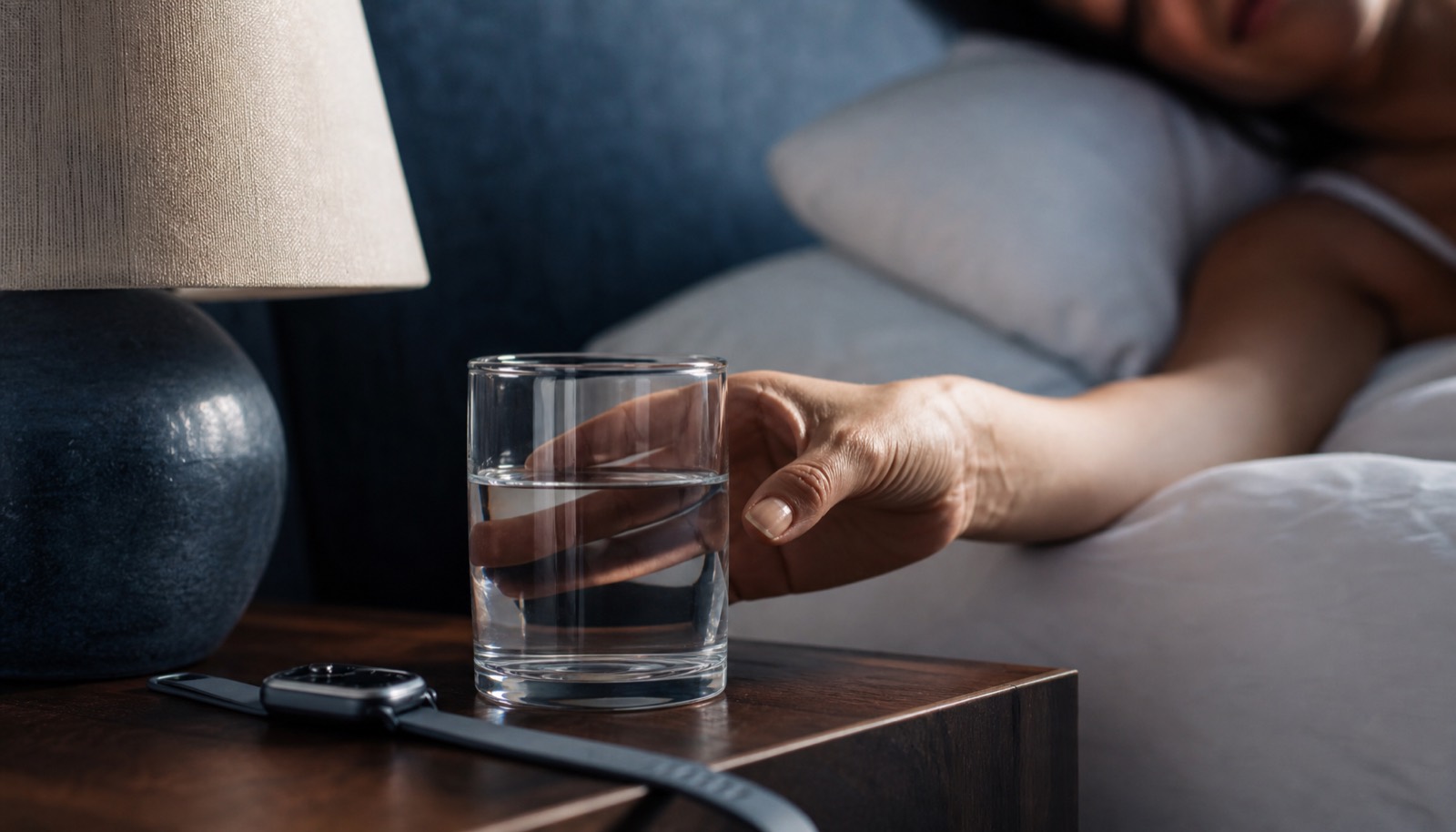
If a tracker score changes how you feel about a night before you check your own body, the data may be creating sleep anxiety. Consumer wearables estimate sleep from indirect signals and are better at broad trends than precise stage labels. Delaying the score, hiding stages, or taking a tracker break can restore perspective.
Key takeaway: Your morning is evidence too. Check the person before the dashboard.
The score can become a suggestion
You wake feeling decent, see a poor score, and suddenly remember the night as a failure. That shift is not imaginary. Expectations influence attention, interpretation, and behavior. A device can turn a normal fluctuation into a problem you spend the day rehearsing.
The term orthosomnia has been used to describe an unhealthy pursuit of perfect wearable sleep data. The label is less important than the cost: more monitoring, more time in bed, more rule-following, and less trust in your own experience.
What consumer trackers measure well, and less well
Most wearables use movement, heart rate, and related signals to estimate sleep. They can often provide useful timing and duration trends. Distinguishing sleep stages is harder because clinical staging uses brain, eye, and muscle signals that a wrist or ring does not directly record.
The result is not fake; it is an estimate. Problems begin when an estimate is treated as a microscopic replay of the night or a diagnosis.
Put friction between waking and scoring
Before opening the app, rate energy, mood, sleepiness, and soreness in plain language. Check the score later, perhaps after breakfast. If your platform allows it, hide sleep stages and keep only the trend that supports an actual decision.
Try a one- or two-week tracker break if checking remains compulsive. The break is not anti-data. It is an experiment to learn whether the measurement is helping the behavior it was supposed to support.
Bring persistent concerns to a human
A wearable cannot rule out insomnia, sleep apnea, movement disorders, or other conditions. If symptoms are persistent, take the broad pattern and your daytime experience to a clinician. You do not need a perfect score to deserve care.
Sources and further reading
- 1Baron KG et al. Orthosomnia: are some patients taking quantified self too far?
Clinical discussion of tracker-driven sleep preoccupation.
- 2de Zambotti M et al. Wearable sleep technology in clinical and research settings
Review of capabilities and limitations.
Research behind the guidance
See how the evidence connects to the product.
Questions people ask next
Should I stop wearing my sleep tracker?+
Not automatically. First change how and when you check it. If the score keeps increasing anxiety or driving unhelpful behavior, a temporary break is a reasonable experiment.
Which tracker has the most accurate sleep stages?+
Performance varies by device, person, and study. No consumer tracker is equivalent to a clinical sleep study, so stage trends should remain approximate.